 Dream Image Club
Videographer
Dream Image Club
Videographer
Step 2 of 5
Shooting to plan, ready for the day
With the shooting script from the planning step, we already know who to film, where, on which day and at what time. I fix the dates, people and places, then go out and shoot to plan. Jobs that keep the budget down usually finish in one day; several executive interviews may take 2–5 days.
Comes in from the step before
The shooting script: who, where, which day, what time
Goes on to the next step
Picture and sound covering the script, ready to edit
What I do at this step
Fixing dates, people and places
From the shooting script I set the order of shots so the people on camera lose as little time as possible, and plan several clips into one day where I can — which is what brings the per-clip price down.
Crew and kit to fit the job
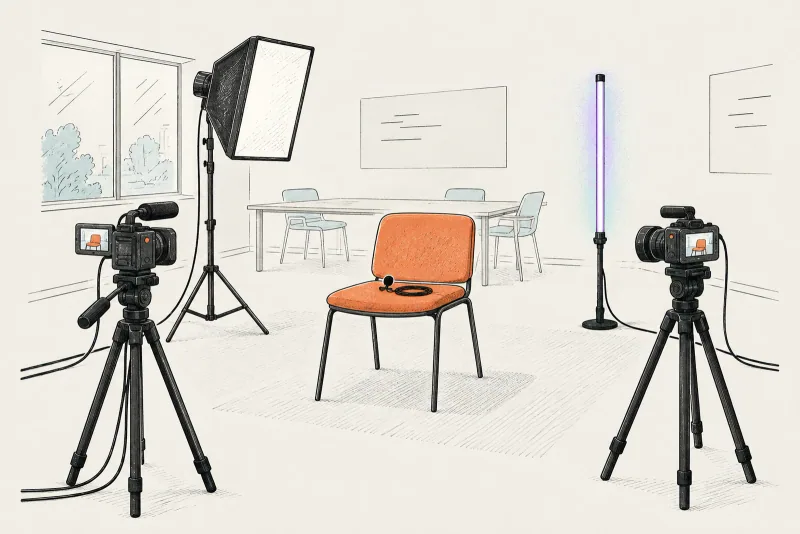
I work alone or with a crew of 2–3, scaled to the job. The kit includes three camera bodies, F2.8 lenses, ten video lights, a gimbal, tripods, wireless mics for up to four speakers at once, and a drone.
Vertical and horizontal together
If you need both, they can be shot on the same day rather than in two shoots; it just takes a well-managed shooting plan to save budget.
Interviews without memorising lines
I send a question outline in advance — not lines to learn — shoot on 2–3 cameras so the ums and ahs cut out without a jump, and ask the questions myself to keep the rhythm. If an executive's time is truly short, 30–40 minutes is enough for a 2–3 minute clip.
Patience for the right moment
Some jobs wait for morning or evening light; some wait for the moment with small children or real people on site. I am patient and hands-on to get the shot, and stay overnight when that is what it takes.
What you prepare
- The places and people ready on the agreed dates
- Photos of the location in advance, to plan angles and light
- Things that must appear — products, logos, uniforms
- One on-site coordinator
- Any permissions needed — parents, the factory
What comes out of it
- Picture and sound covering the shooting script, ready for the edit
- Stills from the same trip, if agreed
- Drone footage, if the job needs it and the site allows flying
What to watch for
Key people's time
Executives and interviewees are usually short of time. Fix the time clearly, and leave room for the crew to set lights before they arrive.
The place is not what you expected
Photos of the location in advance tell us early whether things need moving, more light or a different angle, so problems are not solved on the day.
Safety and permissions
Factories have safety rules, and filming children needs parents' permission. Settle these before the shooting day.
Weather and seasons
Outdoor work depends on light and rain. Talk through a back-up plan during the planning step.
From real jobs




Related types of work
Have a job in mind?
Send what you know — it does not need to be complete. I will help shape the approach and a first budget.